


Friday, October 5, 2012
October 5 Meeting: Summary, Part 3
The winner of the T-shirt competition is:
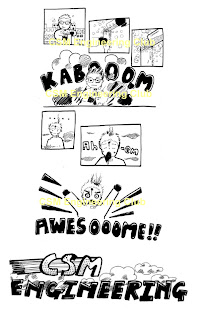 The winning t-shirt color is black. To see all the votes, look at the tab "T-shirt".

October 5 Meeting: Summary, Part 2
Members are encouraged to attend the Unveiling the Universe Day at SLAC on October 27, 1 - 6 pm. We will be attending the 2 pm tour.

"In celebration of SLAC National Accelerator Laboratory’s 50th Anniversary, the laboratory, in cooperation with the Bay Area Science Festival, will open its doors for Unveiling the Universe Day. Activities will be targeted to high school students and above, however all those over the age of 12 are welcome to explore our world-class research facility on October 27, 2012 from 1:00 PM- 6:00 PM. Registration is required.
"Participants will learn about the cutting-edge science underway at SLAC in fields ranging from physics and chemistry to astrophysics and materials science that is revealing the universe at its smallest and largest scales, at its fastest and most extreme.
• "Special tours of the SLAC Research areas including our world famous two mile long linear accelerator and the lab's advanced X-ray facilities will be provided.
• "SLAC scientists will also share how we explore the cosmos, from the origins of the universe to the nature of dark matter and dark energy in our unique 3-D Visualization Center"
"In celebration of SLAC National Accelerator Laboratory’s 50th Anniversary, the laboratory, in cooperation with the Bay Area Science Festival, will open its doors for Unveiling the Universe Day. Activities will be targeted to high school students and above, however all those over the age of 12 are welcome to explore our world-class research facility on October 27, 2012 from 1:00 PM- 6:00 PM. Registration is required.
"Participants will learn about the cutting-edge science underway at SLAC in fields ranging from physics and chemistry to astrophysics and materials science that is revealing the universe at its smallest and largest scales, at its fastest and most extreme.
• "Special tours of the SLAC Research areas including our world famous two mile long linear accelerator and the lab's advanced X-ray facilities will be provided.
• "SLAC scientists will also share how we explore the cosmos, from the origins of the universe to the nature of dark matter and dark energy in our unique 3-D Visualization Center"
October 5 Meeting: Summary, Part 1
We started the Arduino catapult project. We will keep working on this for the next two or three weeks. If you could not make it to this week's meeting, there is still room for you to join.
Here is one of the catapult kits (the potentiometers have not arrived yet):

Here is one of the catapult kits (the potentiometers have not arrived yet):
Monday, October 1, 2012
October 5 Meeting: Preview, Part 4
We will be voting on the t-shirt design, so please take one last look at the designs ("T-Shirt" tab above).

October 5 Meeting: Preview, Part 3
We finished introducing the Arduinos. If you were unable to finish all the sample circuits, do not worry - you will learn as we go. We will start the Arduino catapult project this week.

Objective: Construct a machine that throws a small rubber ball as far as possible. The machine that throws the ball the farthest wins.
Materials:
Popsicle sticks
wood dowel
foam core board
thin wire
rubber bands
hot glue
tape
metal ballast
paper
manila folder
hanging Folder
paper clips
cotton string
Arduino kit
Rules:
1. The machine must be stationary.
2. The machine must operate without human aid – only the pushbutton and potentiometer may be touched in order to launch the ball.
3. The machine should be able to re-load and launch a second ball without the need of human aid other than touching the pushbutton or potentiometer.

Objective: Construct a machine that throws a small rubber ball as far as possible. The machine that throws the ball the farthest wins.
Materials:
Popsicle sticks
wood dowel
foam core board
thin wire
rubber bands
hot glue
tape
metal ballast
paper
manila folder
hanging Folder
paper clips
cotton string
Arduino kit
Rules:
1. The machine must be stationary.
2. The machine must operate without human aid – only the pushbutton and potentiometer may be touched in order to launch the ball.
3. The machine should be able to re-load and launch a second ball without the need of human aid other than touching the pushbutton or potentiometer.
October 5 Meeting: Preview, Part 2
The Lawrence Berkeley National Laboratory 2012 Open House is approaching. It is Saturday, October 13, 10 am to 3 pm. We will organize transportation.

There are many activities, which you can read in the program guide here.
Lectures
10:30 am Manfred Auer — A 3-D Peek Into the Inner Workings of Cells
11:00 am Nathan Hillson — Synthetic Biology: What it Is and How it’s Useful
Noon Saul Perlmutter — The Nobel Prize One Year Later
12:30 pm Paul Alivisatos (Berkeley Lab Director) — Climate Change: What We Need to Know and What We Need to Do”
1:30 pm Ian Hinchliffe — Latest News on the Higgs Boson From the Large Hadron Collider
2:00 pm Blake Simmons — Driving the Bioeconomy: Advanced Biofuels at Joint BioEnergy Institute
2:30 pm Peter Denes — A Next Generation Light Source


There are many activities, which you can read in the program guide here.
Lectures
10:30 am Manfred Auer — A 3-D Peek Into the Inner Workings of Cells
11:00 am Nathan Hillson — Synthetic Biology: What it Is and How it’s Useful
Noon Saul Perlmutter — The Nobel Prize One Year Later
12:30 pm Paul Alivisatos (Berkeley Lab Director) — Climate Change: What We Need to Know and What We Need to Do”
1:30 pm Ian Hinchliffe — Latest News on the Higgs Boson From the Large Hadron Collider
2:00 pm Blake Simmons — Driving the Bioeconomy: Advanced Biofuels at Joint BioEnergy Institute
2:30 pm Peter Denes — A Next Generation Light Source
October 5 Meeting: Preview, Part 1
The SLAC tour is approaching. Journalist Nathan Mattise of ArsTechnica visited SLAC recently and posted this article: "A rare tour of the Stanford Linear Accelerator Center (in pictures)".

"Last month, SLAC Labs (the Stanford Linear Accelerator Center) reached its golden anniversary. After 50 years of operation the organization has built up quite a résumé. For instance, it claims six different Nobel prize-winning scientists for research that discovered two different fundamental particles. And today the facility keeps on churning out science: 1,000-plus papers come out of SLAC each year from the roughly 3,400 scientific professionals from across the world that utilize the facility."
"Last month, SLAC Labs (the Stanford Linear Accelerator Center) reached its golden anniversary. After 50 years of operation the organization has built up quite a résumé. For instance, it claims six different Nobel prize-winning scientists for research that discovered two different fundamental particles. And today the facility keeps on churning out science: 1,000-plus papers come out of SLAC each year from the roughly 3,400 scientific professionals from across the world that utilize the facility."
Subscribe to:
Posts (Atom)